Travertine vs Marble: Which Natural Stone Is Right for Your Project?
Introduction Choosing between travertine vs marble is a key decision for architects, designers, contractors and homeowners. Both natural stone slabs offer timeless beauty, but they differ in appearance, porosity, durability and maintenance. This guide compares travertine and marble across look, technical properties, finishes, slab sizes and best uses so you can match material to project requirements. For exact slab dimensions, large-format book matched slabs or custom finishes, visit our slab photos or request samples to inspect color and veining in person.

travertine vs marble
- Appearance: Marble is known for its crystalline surface and veining; travertine presents warm, earthy tones with linear or concentric patterns and natural pitting.
- Porosity & durability: Travertine is generally more porous and softer than marble, affecting sealing frequency and suitability for heavy abrasion.
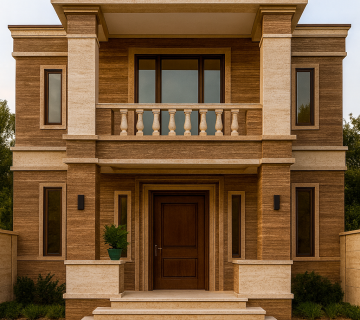
- Typical uses: Marble slabs are favored for countertops, feature walls and luxury floors; travertine slabs excel for flooring, patios, pool decks and rustic interiors and also exterior designs.
- Cost & rarity: Price depends on origin, color, slab size and finish — rare marbles and book-matched slabs usually carry premium pricing.Ghodsi Stone is one the biggest factory that is more than 50 years experienced in producing different types of marble and travertine and export to all over the worlds.
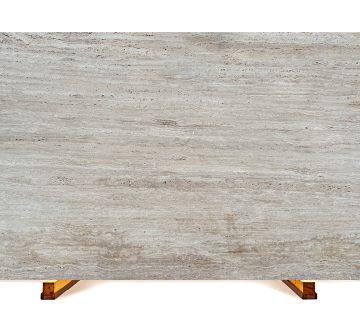
Appearance, finishes and design impact Marble slabs offer dramatic veining and a polished crystalline look that suits contemporary and classical interiors. Polished marble intensifies color and veining, while honed or leathered finishes reduce gloss for a softer, modern feel. Travertine slabs present warm neutrals — cream, beige, ochre and rust — with characteristic voids and troughs. Travertine can be supplied filled (resin or cement fill mastic) for smooth countertops and easier maintenance, or unfilled for textured, slip-resistant flooring and pool surrounds.
Common finishes and best uses:
- Polished: marble slabs for countertops and feature walls.
- Honed: both stones for floors and bathrooms where glare is unwanted.
- Filled travertine: countertops and high-use interior surfaces needing a flat finish.
- Tumbled or brushed: outdoor paving or rustic interiors.
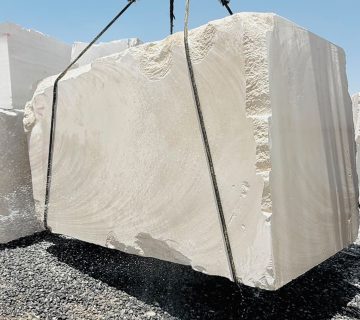
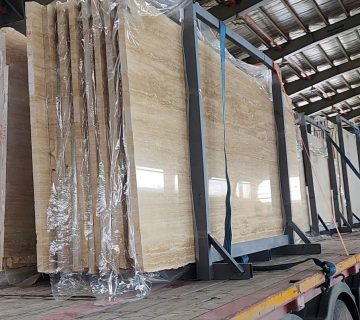
Technical properties, slab sizes and installation notes Density, porosity and slab dimensions influence selection. Marble is denser and less porous than many travertines, but both are available in standard and large-format slab sizes. Typical commercial slab sizes vary by quarry and processing: lengths up to 3–2 m and widths up to 1.8–2.1 m; thickness commonly 20 mm (2 cm) or 30 mm (3 cm). For large islands, book-matched walls or continuous veins, confirm block yield with your supplier and request bookmatching options.
for more information please check this blog.We discussed that topic in detail in that article.
Stone Terms in Construction: Types, Slabs, Tiles, and Finishes
- Substrate & support: use reinforced mortar beds or certified stone anchors for facades. Large-format marble and travertine require flat substrates to avoid point loading and cracking.
- Adhesives: choose polymer-modified or epoxy mortars when flexibility or stain resistance is needed.
- Joints & seams: plan seam placement with mock-ups to preserve veining; filled travertine may require edge filling for clean countertop profiles.
- Outdoor use: for pool decks choose unfilled, textured travertine for slip resistance and heat comfort. Marble outdoors may weather and patina, especially in freeze–thaw climates.
Maintenance, sealing and longevity Both travertine and marble benefit from regular sealing. Travertine’s higher porosity typically requires more frequent sealing to prevent staining, especially in kitchens and exterior installations. Use penetrating sealers to protect pores while preserving texture; avoid topical sealers that alter color or sheen. Clean with pH-neutral stone cleaners — never acids (vinegar, citrus) that etch marble and can damage travertine fillers.
Repair and refinishing:
- Marble (White Crystalline Marble) can be repolished to remove etches and scratches, though repeated polishing reduces surface thickness.
- Filled travertine(Cream Travertine) is easier to repair for chips and edges; unfilled travertine retains natural texture but may need periodic re-filling for countertops.
Best uses by project type
- Kitchens: filled travertine or honed marble for easier maintenance; polished marble for statement islands when careful upkeep is acceptable.
- Bathrooms: honed marble or honed travertine for vanities and walls; textured travertine for shower floors and wet areas for slip resistance.
- Floors & high-traffic areas: filled travertine or honed marble chosen based on abrasion resistance and finish.
- Outdoors & pools: unfilled, tumbled travertine resists heat and provides low slipperiness; marble is less common outdoors in freeze-prone areas.
- Facades & cladding: both are viable—select anchoring, thickness and finish based on exposure and maintenance expectations.