

-
Technical Guide: Maintaining Luxury Natural Stone in Extreme Climates
Preserving the Grandeur of Marble and Travertine Against Heat and Humidity
Investing in premium natural stone slabs like Onyx, Travertine, and Marble is a hallmark of luxury architecture. However, in demanding environments—such as coastal regions or areas with extreme temperature fluctuations—environmental factors can challenge the stone’s integrity and luster. This guide outlines the professional protocols for stone maintenance in harsh climates.
1. The Challenge of Humidity and Salinity in Coastal Areas
In coastal regions (e.g., the Persian Gulf), high humidity combined with airborne salt particles leads to “Salt Attack.” When salt penetrates the stone’s pores and crystallizes after water evaporates, it causes “efflorescence” (white powdery deposits) or surface scaling.
-
Technical Solution: Apply high-quality Nano-Impregnating Sealers. These advanced coatings penetrate deep into the stone’s pores to block moisture and salt while allowing the stone to “breathe,” preventing internal pressure buildup.
2. Thermal Shock and Temperature Fluctuations
In desert climates or regions with drastic day-to-night temperature shifts, natural stone undergoes constant expansion and contraction. Without proper processing, this thermal stress can lead to Micro-cracks, especially in veined varieties.
-
The Ghodsi Stone Advantage: At Ghodsi Stone, we utilize Italian Breton technology. By applying high-tensile epoxy resin and fiberglass mesh backing, we increase the stone’s structural resistance to thermal shock by up to 300%.
3. UV Exposure and Color Stability
Direct and prolonged exposure to intense UV radiation can cause “fading” in certain dark marbles or pigmented stones. UV rays can break down the natural mineral bonds that give the stone its vibrant color.
-
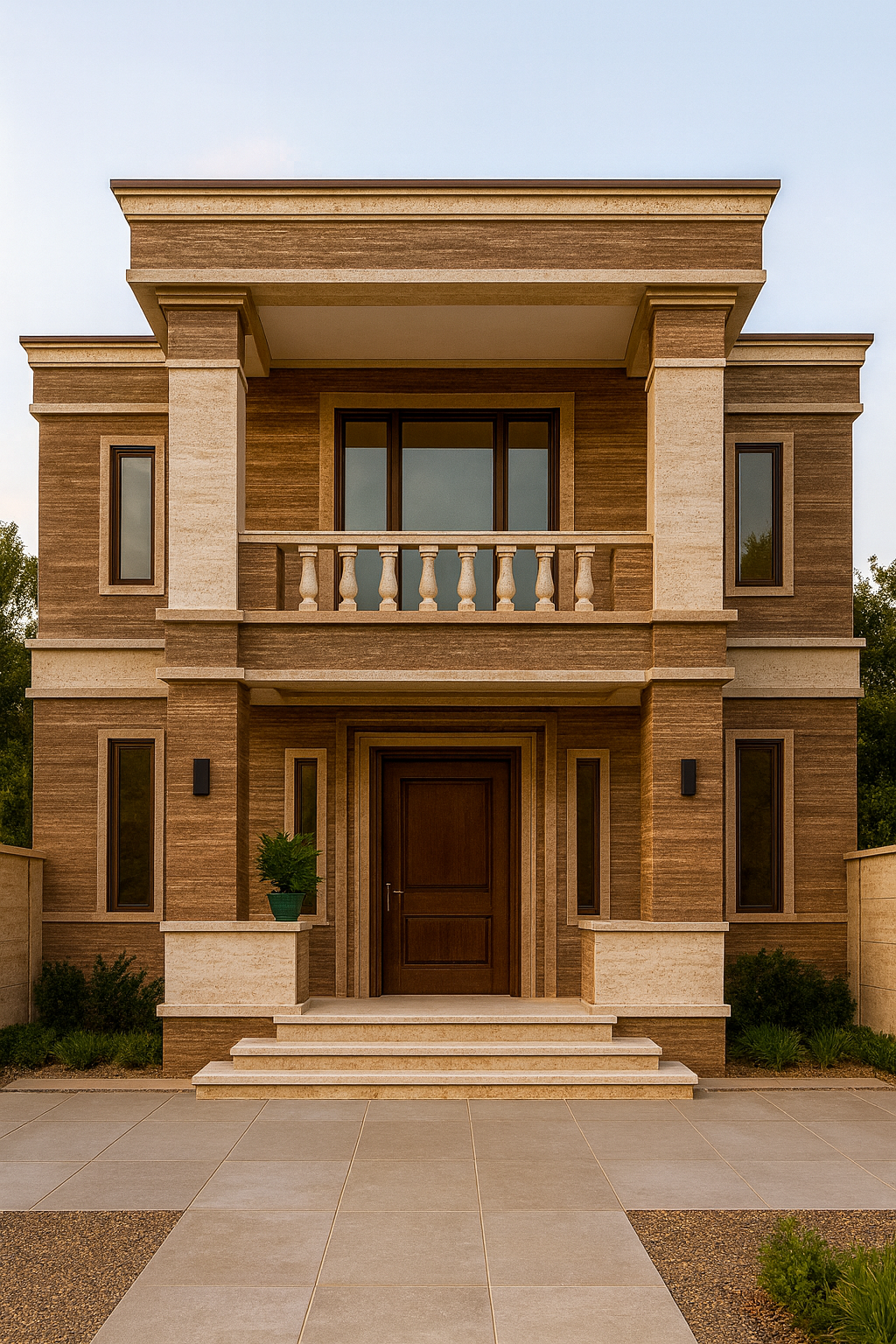
Expert Recommendation: For outdoor facades in sun-drenched regions, Light-colored Travertine is the ideal choice due to its natural UV resistance. If using colored stones outdoors, ensure the application of Anti-UV protective coatings.
4. Technical Selection Guide by Climate
5. Professional Maintenance Checklist
To maintain the “Export-Quality” finish of your stone over decades, follow these steps:
-
pH-Neutral Cleaning: Avoid acidic or harsh alkaline cleaners. Use only specialized stone soaps.
-
Engineered Grouting: Use Epoxy Grout for joints to prevent water infiltration behind the slabs.
-
Periodic Re-sealing: Depending on exposure, re-apply professional sealers every 2–5 years to maintain the stone’s hydrophobic properties.
Conclusion
The longevity of a stone structure is a synergy between Correct Selection and Scientific Maintenance. At Ghodsi Stone, with over 50 years of expertise, we provide stones processed with the world’s finest machinery, ensuring they withstand the most rigorous global climates.
Technical Support: Our team of experts is available to provide detailed technical analysis and stone selection advice for your international projects.
-
Technical Guide: Maintaining Luxury Natural Stone in Extreme Climates
نوشته های مرتبط ...


امکان ارسال دیدگاه وجود ندارد!